
Branding is more than a logo, a color, or a slogan — it is the complete identity of a company. In today’s fast-moving world, strong branding determines which businesses stand out, which ones build trust, and which ones customers stay loyal to. As we move deeper into 2025, branding has become one of the most important competitive advantages a business can build. Consumers make decisions in seconds. According to global insights published on Statista, brands with strong identity and emotional connection outperform weaker brands significantly in customer retention and recognition.
This branding guide explains everything you need to build a powerful brand — including definitions, strategy, identity, examples, mistakes to avoid, and the future of branding in an AI-driven world. Whether you’re a startup, a corporate leader, or a creator building a personal brand, this branding guide breaks down every step clearly and strategically so you can apply it instantly. By the end of this branding guide, you’ll understand how to create a brand that is memorable, trustworthy, and built for long-term success.

What Is Branding? (And Why Most People Get It Wrong)
Branding is the perception people have about your business. It is not what you tell them — it’s what they believe after interacting with you.
Branding includes:
How your brand looks (visual identity)
How your brand speaks (brand voice)
How your brand behaves (values & actions)
How your brand makes people feel (experience)
Most brands fail because they only focus on visuals.
But successful branding is built on identity + emotion + consistency + reputation. HubSpot explains how branding influences customer trust and conversions:
https://blog.hubspot.com/marketing/branding
Why Branding Matters More Than Ever in 2025
The business world has changed, customer behavior has changed, and attention spans have become shorter. As a result, a powerful brand helps you win trust instantly and stand out with clarity.
1. Every Market Is Overcrowded
Dubai, Riyadh, New York, London — every major market is filled with competition. Therefore, the only sustainable way to rise above competitors is by building strong branding that communicates who you are and why you matter.
2. Trust Has Become Currency
According to the Edelman Trust Report, modern consumers trust brands based on transparency, consistency, and emotional connection — not just product quality. Moreover, customers choose brands that feel reliable, familiar, and aligned with their values.
3. Digital Platforms Reward Strong Identity
Social media algorithms push brands with strong visuals, storytelling, tone, and engagement. Consequently, brands that invest in identity gain more visibility, higher reach, and stronger community engagement.
4. Branding Improves SEO & Conversions
Google rewards websites that show:
Strong E-E-A-T (Experience, Expertise, Authority, Trust)
Consistent branding
Clear messaging
In addition, a well-defined brand reduces bounce rates and helps search engines understand who you are, which boosts organic visibility and conversions.
5. Branding Builds Long-Term Business Value
A recognizable brand increases customer lifetime value, retention, and word-of-mouth. Furthermore, strong branding supports long-term growth by making your company memorable and trusted in a crowded marketplace.
Types of Branding
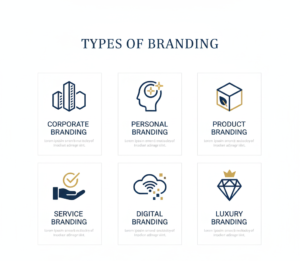
1. Corporate Branding
Company-wide identity used by large businesses.
Examples: Emirates, Apple, Netflix.
2. Personal Branding
For entrepreneurs, coaches, artists, creators, CEOs.
Examples: Gary Vee, Cristiano Ronaldo, Steven Bartlett.
3. Product Branding
Branding built around a product line.
Examples: iPhone, Nike Air, Coca-Cola Classic.
4. Service Branding
Relevant for agencies, clinics, salons, restaurants.
Examples: Barber shops, clinics, agencies.
5. Employer Branding
How your company is perceived by potential employees.
6. Digital Branding
Your online identity:
Website, social media, content, ads, videos.
7. Luxury Branding
Focused on exclusivity, prestige, and experience.
Examples: Rolex, Gucci, Dior.
Importance of Branding
Branding is important because it shapes how people perceive your business, influences their buying decisions, and determines whether they trust you over competitors. In a world where customers have endless options, strong branding helps your company stand out and become memorable. It builds emotional connection, turning first-time buyers into loyal customers who return because they trust your identity, values, and experience. Effective branding also increases credibility, improves marketing performance, and allows businesses to charge premium prices simply because customers associate the brand with quality. Whether you’re a small business or a global company, investing in branding creates long-term value, drives recognition, and forms the foundation for business growth and stability.
Branding Guide – Key Elements of a Strong Brand Identity
Branding Guide Insight – Brand Story
Your brand story is the emotional narrative behind your business. It explains why you exist, what you stand for, and what change you want to create. Moreover, a strong story helps customers connect with you on a deeper level, making your brand more memorable and trustworthy.
Branding Guide Framework – Brand Values
Your brand values represent your beliefs and guiding principles. In other words, they define how your brand behaves and how you make decisions. Furthermore, these values shape your internal culture and influence how customers perceive your brand.
Visual Identity
A strong visual identity allows your brand to be recognized instantly. It includes:
Logo
Color palette
Typography
Layout styles
Photography style
Additionally, a consistent visual system helps build trust and creates a professional, cohesive brand experience.
Brand Voice
Your brand voice determines how you communicate.
It can be formal, friendly, bold, energetic, or luxurious.
Because your tone affects how people feel about your brand, it must remain consistent across all platforms.
Moreover, a clearly defined brand voice strengthens recognition and emotional connection.
Brand Experience
Brand experience is what customers feel every time they interact with you.
This includes website experience, customer service, packaging, emails, and even small details.
When your brand experience remains smooth and consistent, customers are more likely to return.
Brand Promise
Your brand promise is the core guarantee you deliver every time.
It tells customers what they can expect from you.
As a result, a clear brand promise builds trust and helps you stand apart from competitors.
Brand Positioning
Brand positioning explains where you stand in the market and how you are different.
However, positioning is not just about being better — it is about being different in a way your audience cares about.
This clarity helps customers understand why they should choose your brand over others.
How to Build a Brand from Scratch in 2025 (Step-by-Step) – Branding Guide
Step 1: Identify Your Target Audience
First, clarify the exact customer you want to serve.
Then, understand their fears, desires, habits, and buying behavior.
By doing this, you build a brand that speaks directly to them.
Step 2: Analyze Competitors
Study your competitors’ strengths and weaknesses.
However, the goal is not to copy them — the goal is to identify opportunities to differentiate your brand.
This allows you to build your own identity rather than blending into the market.
Step 3: Craft Your Brand Positioning
Define your unique value.
Are you premium? Affordable? Fastest? Most reliable? Most innovative?
Choosing one clear direction helps your brand stand out.
Furthermore, strong positioning guides your marketing, visuals, and messaging.
Step 4: Build Your Brand Personality – Branding Guide
Your brand personality is the emotional character your brand expresses.
For example, it might be bold, elegant, playful, or professional.
Because personality affects how customers feel about your brand, it must stay consistent across all channels.
Additionally, a strong personality makes your brand easier to remember.
Step 5: Create Visual Identity
Your visual identity includes:
Logo
Colors
Fonts
Patterns
Icons
Imagery
These elements must work together harmoniously.
Moreover, they must reflect your brand positioning and personality.
Step 6: Build Your Brand Voice
Your brand voice shapes your communication style.
It includes tone, wording, rhythm, and emotional influence.
In addition, maintaining a consistent voice across social media, websites, ads, and emails strengthens trust and recognition.
Step 7: Create a Story-Based Messaging Framework
This framework defines how you communicate your brand story:
Who you are
What you do
Why you do it
Who you help
What makes you different
When you communicate through storytelling, your brand becomes more engaging and relatable.
As a result, customers feel more connected and loyal.
Step 8: Design Your Brand Touchpoints
Your touchpoints include everything customers see or interact with:
Website
Social media
Emails
Packaging
Videos
By aligning all touchpoints with your branding, you create a seamless and memorable customer experience.
Furthermore, consistent touchpoints increase your perceived professionalism.
Step 9: Maintain Consistency
According to LucidPress, consistent branding can increase revenue by up to 33%.
Therefore, consistency is one of the biggest drivers of long-term brand success.
It helps customers instantly recognize your brand, trust your business, and choose you repeatedly.
Step 10: Build Brand Community
People don’t love products — they love belonging.
Therefore, building a community around your brand strengthens emotional loyalty.
This can include social media groups, newsletters, events, or loyal-customer programs.
Additionally, strong brand communities naturally lead to higher engagement and word-of-mouth marketing.
10 Best Branding Examples (Updated 2025)
| Brand | What Makes Them Stand Out |
|---|---|
| Apple | Minimal premium identity + emotional storytelling |
| Nike | Purpose-driven branding (Just Do It) |
| Tesla | Innovation-first positioning |
| Emirates | Luxury, trust, consistency |
| Dubai Tourism | Strong visual storytelling |
| Starbucks | Customer experience branding |
| Netflix | Personalized branding |
| IKEA | Affordable lifestyle identity |
| Sephora | Community-driven |
| Samsung | Innovation mixed with accessibility |
Common Branding Mistakes (And How to Avoid Them)- Branding guide
No clear message
Overcomplicated visuals
Inconsistency across platforms
Changing branding too often
Weak value proposition
Copying competitor branding
No storytelling
Confusing brand voice
Branding vs Marketing (Simple Comparison)
| Branding | Marketing |
|---|---|
| Builds trust | Generates sales |
| Long-term identity | Short-term campaigns |
| Emotional | Practical |
| Foundation | Promotion |
| “Who we are” | “How we sell” |
Marketing brings customers in.
Branding makes customers stay.
The Future of Branding (2025-2030)
1. AI-Powered Branding (Smarter, Faster, More Predictive)
Artificial Intelligence is no longer optional — it has become a key driver in how brands are created, managed, and evolved.
AI now helps brands with:
✔ Predictive customer behavior
✔ Automated brand messaging
✔ Data-driven design decisions
✔ Personalized marketing campaigns
✔ Consistent tone and message across platforms
Modern branding teams use AI for:
Logo generation
Brand voice assistants
Audience segmentation
Real-time trend prediction
According to research published on Statista, more than 80% of global companies are expected to use AI tools for marketing and branding by 2030.
2. Hyper-Personalization Becomes the New Standard
Gone are the days when one brand message worked for everyone.
Today’s consumers — especially in markets like Dubai — expect brands to speak directly to them, not at them.
Hyper-personalization includes:
Personalized product recommendations
Dynamic website experiences
Customized emails and offers
Unique brand experiences based on location, behavior, and interest
Netflix, Amazon, and Spotify built global empires using hyper-personalized branding.
Now, even small businesses can apply the same psychology using simple tools.
3. Branding That Feels Human (Emotion Over Aesthetics)
People follow emotions, not color palettes.
The brands that win in the future are the ones that create human connection, not just good design.
2025–2030 brands are focusing on:
Real stories
Honest messaging
Community building
Relatable values
Purpose-driven missions
Humans crave authenticity. Brands must show personality, not perfection.
4. Video-First Branding
Short-form video is becoming the main identity tool.
5. Web3 + Virtual Identity
Brands will exist inside virtual worlds and digital spaces.
Contact Zorax Media → https://zoraxmedia.com/contact
